

From the Roastery / Fresh Crop 2026
Three fresh crops, three relationships we have kept for years
New harvests of La Armonia Hermosa, San Jeronimo Miramar, and Shantawene are landing at the Roastery. Same farms, same families, brand new coffee.
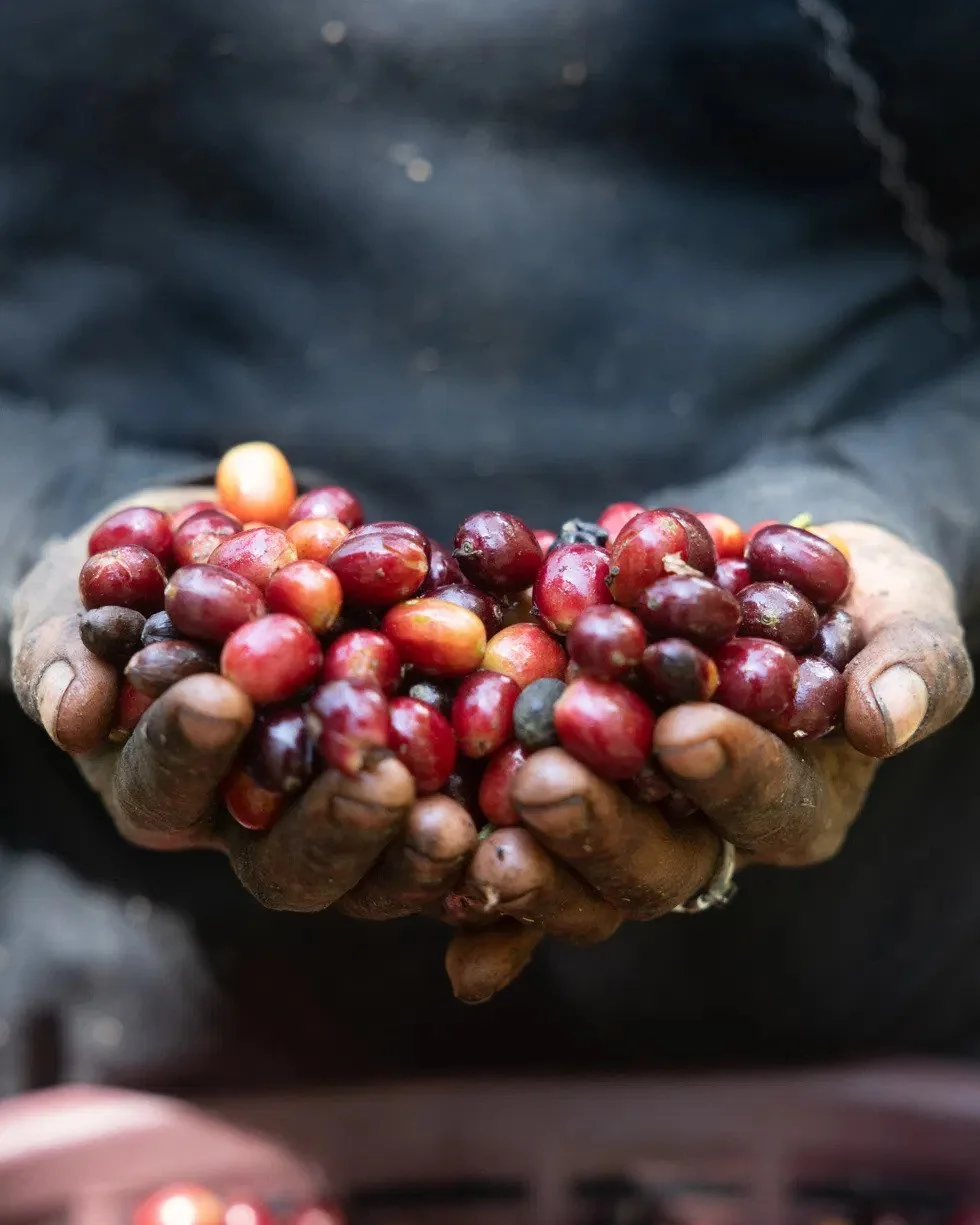
Three of the coffees we lean on hardest are arriving fresh. La Armonia Hermosa and San Jeronimo Miramar from Guatemala, and Shantawene from Ethiopia. These are not new coffees to us. We have been buying from these same producers for years, in some cases for two decades. What is new is the crop.
If you have had any of the three before, the bag is going to taste different this time. That is not a mistake, and it is not a change in the roast. It is the point.
What "fresh crop" actually means
Coffee is agriculture, which means it has a season. A coffee tree flowers, the fruit ripens over months, and there is one window each year when the cherry comes off the branch. Guatemala harvests roughly December through March. Ethiopia runs a little later. From there the coffee gets pulped or dried, rested, milled, graded, loaded into a container, and shipped across an ocean. By the time green coffee reaches our Roastery in Maryville, it has already had a long year.
Green coffee does not spoil the way milk does. It fades. The aromatics that make a great Ethiopian natural smell like a fruit stand are volatile, and they quietly leave. Acidity flattens out. Sweetness goes papery. A coffee that cupped like raspberry in June can cup like generic dried fruit by the following spring. Roasters call the tired version "past crop," and once you have tasted the two side by side you cannot unlearn the difference.
So when a fresh crop lands, the whole Roastery resets. We cup the new arrival against the lot we have been running, rebuild the roast profile from scratch, and re-taste until the coffee tells us what it wants to be this year. Then we rewrite the tasting notes, because last year's notes describe last year's coffee.
Why these three, and why we keep going back
Every coffee we call a relationship coffee means we know exactly whose hands it passed through. Not a broker's regional blend. A farm, a family, a mill, a name.
That is a slower and more expensive way to buy coffee, and it is the entire reason our quality holds steady. When you buy the same lot from the same people year after year, you can talk honestly about what cupped well and what did not. You can commit before the harvest, which is when producers actually need the money. You can put capital toward a depulper or a drying bed and see it show up in the cup two seasons later. Our owner and CEO, Les Stoneham, has been walking these farms for years, and our sister company Deeper Roots Coffee shares several of these partnerships with us.
Fresh crop day is the payoff for all of that. It is the one day a year we get to find out what the work turned into.
La Armonia Hermosa
La Armonia Hermosa translates to "the beautiful harmony," and it is the coffee that started everything for our sister company. Deeper Roots Coffee is named for this relationship. It grows high on the slopes of Volcan de Agua, above the Antigua Valley, and it is farmed by Julio Cuy Xar, his son Melvin, and a group of neighboring families who organized themselves into something bigger than any one of their plots.
Smallholder farmers in this village spent generations growing excellent coffee and having very little say in what happened to it after it left their hands. That changed slowly and deliberately: a wet mill of their own, technical training, financing that arrives before harvest instead of after it, and buyers who commit to the whole crop every single year. Deeper Roots and Vienna buy all of it, every season. That guarantee is the difference between farming coffee and gambling on it.
- Producer
- Julio & Melvin Cuy Xar
- Altitude
- 1,500 to 2,000 m
- Process
- Washed
- Body
- Tea-like
- Acidity
- Mild
- Roast
- Medium
This year's lot leans brighter and cleaner than last season's. The stone fruit is still there, but it has gone from soft peach to concentrated dried apricot, with a citrus lift on the front and a graham cracker sweetness that settles in as the cup cools. The body stays light and tea-like, which makes it a very easy coffee to drink a lot of.
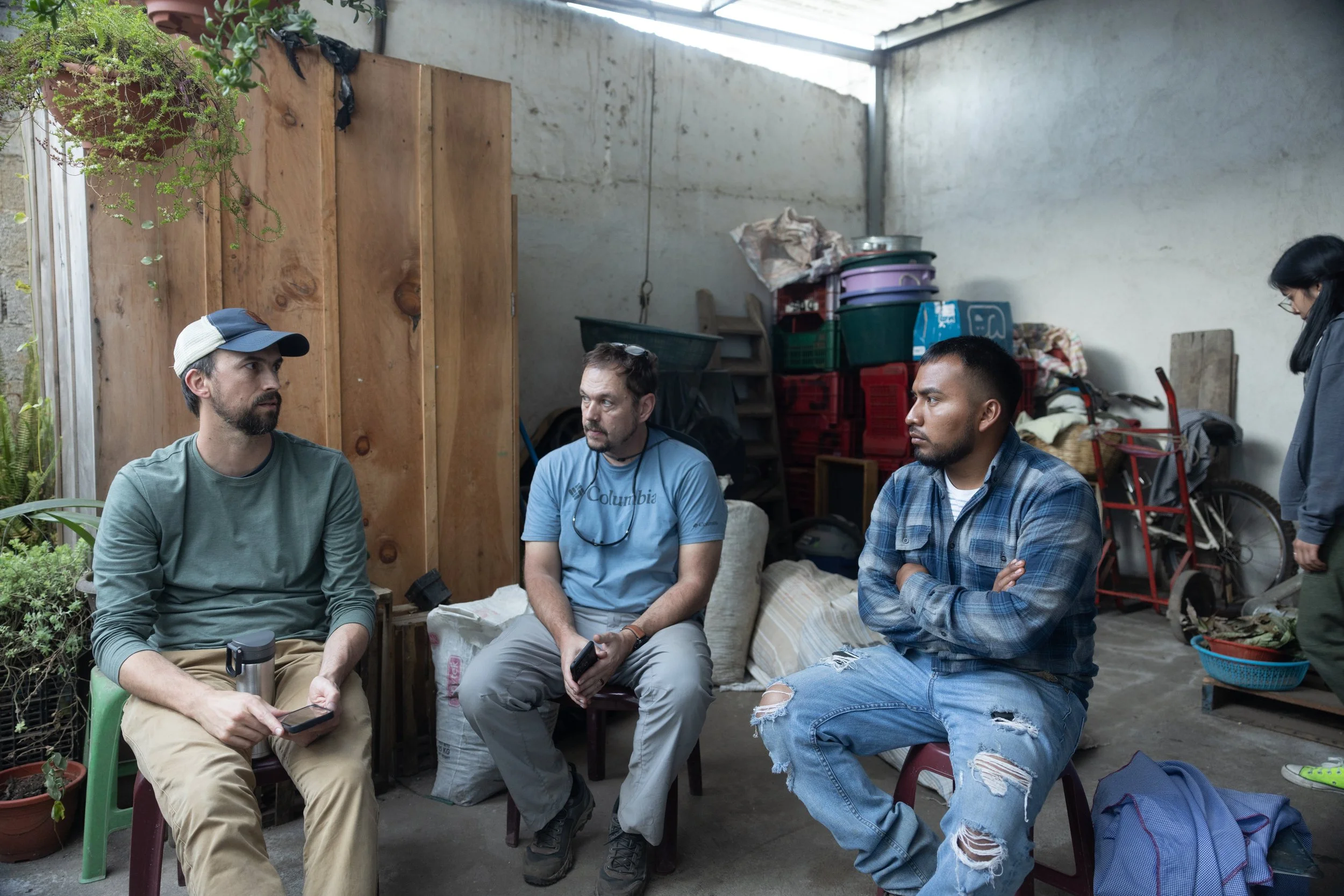
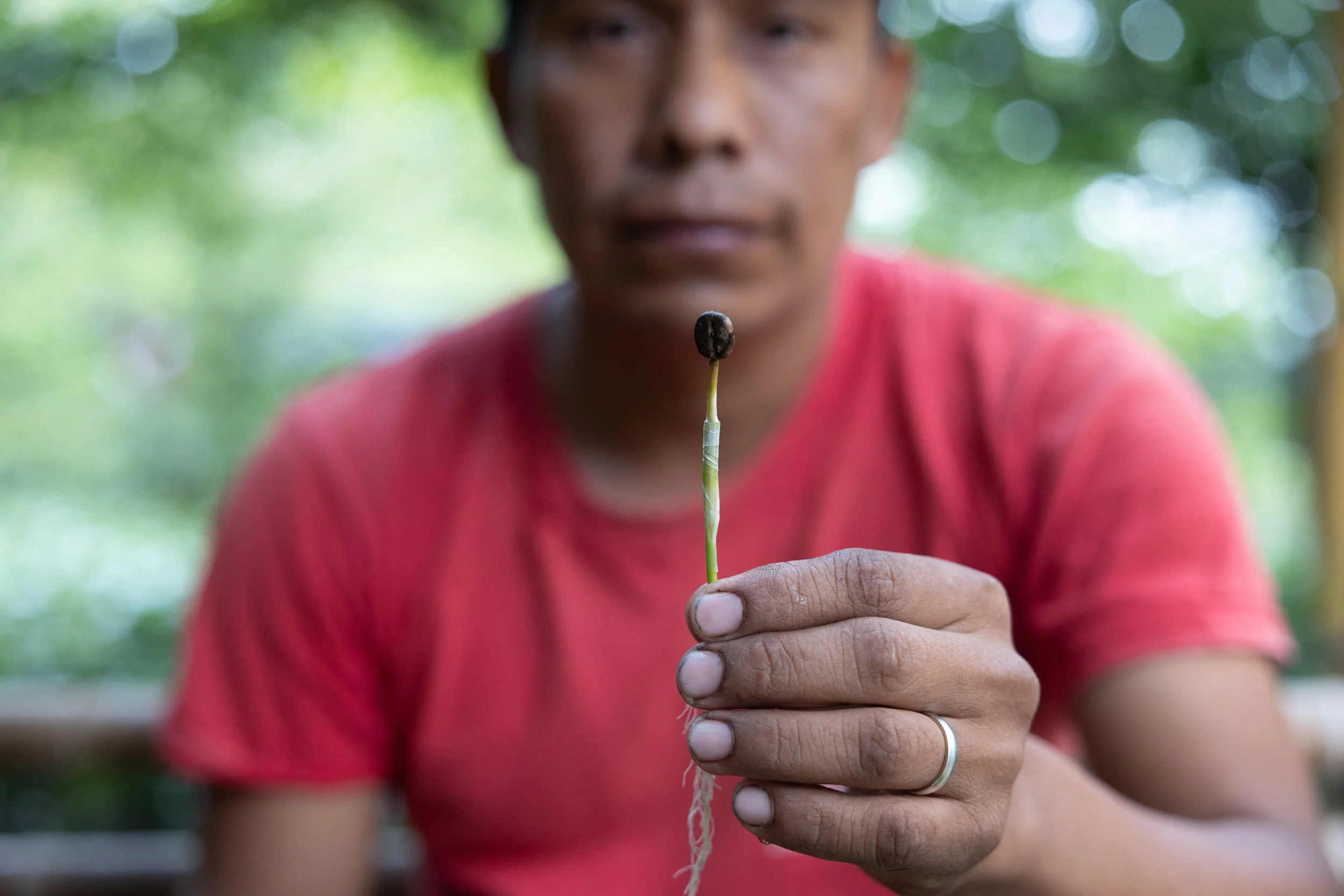
Left: sitting down with growers, which is most of what an origin trip actually is. Right: a seedling with the bean still attached. This one is somebody's 2032 harvest.
Finca San Jeronimo Miramar
The Bressani family has worked this land on the flank of Volcan Atitlan for more than a century, since Italian immigrants started it as a dairy operation in the early 1900s. Calling it a coffee farm undersells it. There are Jersey cows, honeybees, cacao, and tropical fruit on the property, and above all of it sits a protected cloud forest reserve that is not there for decoration.
That reserve feeds the volcanic springs that wash the coffee, and the same water runs the hydroelectric system that powers the entire mill. The farm keeps each plot's picking separate so it can evaluate quality lot by lot, and it runs its own lab researching natural approaches to fungus and pest pressure. It is one of the most genuinely self-sufficient operations we buy from anywhere.
- Producer
- Finca San Jeronimo Miramar
- Cultivar
- Catuai
- Altitude
- 1,370 to 1,500 m
- Process
- Washed
- Body
- Medium
- Acidity
- Mild
This is the single-varietal Catuai, and the new crop kept the walnut backbone while trading last year's fudge and dark cherry for something brighter. Toffee sweetness, and a clean strip of orange peel on the finish. If you want one coffee that works equally well in a drip machine at 6 a.m. and a pour-over on Saturday, this is the one.
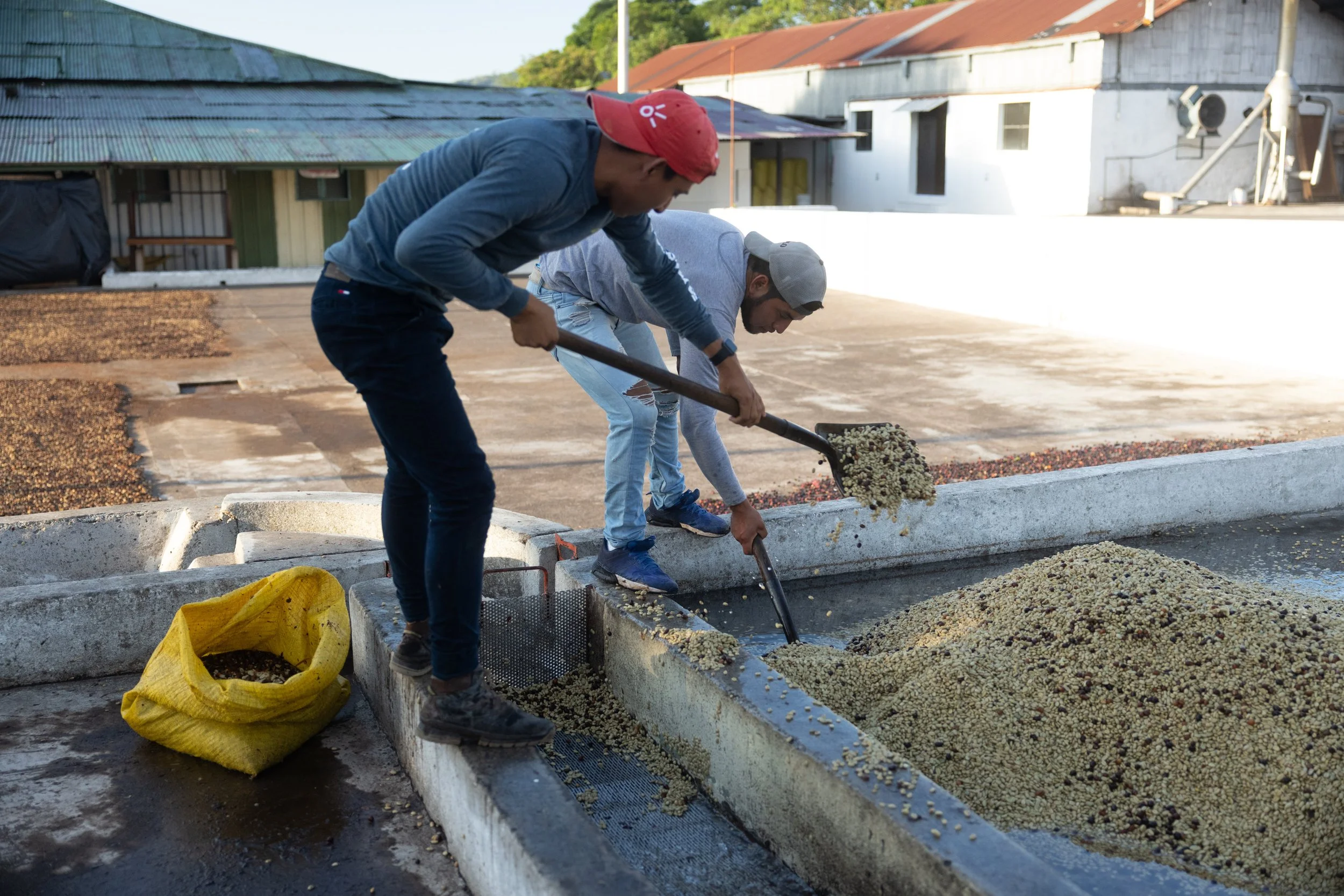
Parchment on the patio and coffee moving through the washing channels. Turned by hand, checked by hand, every few hours until the moisture is right.
Shantawene Natural
Coffee is native to Ethiopia, and Sidama is one of the places that still makes the case for why that matters. Shantawene Village sits in the Bensa district, and the coffee comes to us through Daye Bensa, founded by brothers Asefa and Mulugeta Dukamo. Daye Bensa collects cherry from its own farm plus hundreds of surrounding smallholders in Shantawene, Karamo, and Bombe, most of them growing on steep ground between 1,900 and 2,300 meters.
The mill here is exceptional, and the industry noticed: a Shantawene lot placed seventh in Ethiopia's first Cup of Excellence competition. The Dukamo family has spent years pushing better processing knowledge out through their whole network, and we got to host Asefa and his family at our Roastery for a tour and a cupping of their own coffee. That visit is still one of our favorite days.
- Producer
- Dukamo Family, Daye Bensa
- Cultivar
- Heirloom varieties
- Altitude
- 1,900 to 2,300 m
- Process
- Natural, shade dried
- Body
- Medium
- Acidity
- Bright
This is the biggest swing of the three. Raspberry carried over, but the floral lavender note gave way to full tropical fruit, and there is a rounded agave sweetness underneath that we did not get last year. The body filled out to medium as well. If you have a friend who insists they do not like fruity coffee, this is still the bag to hand them.
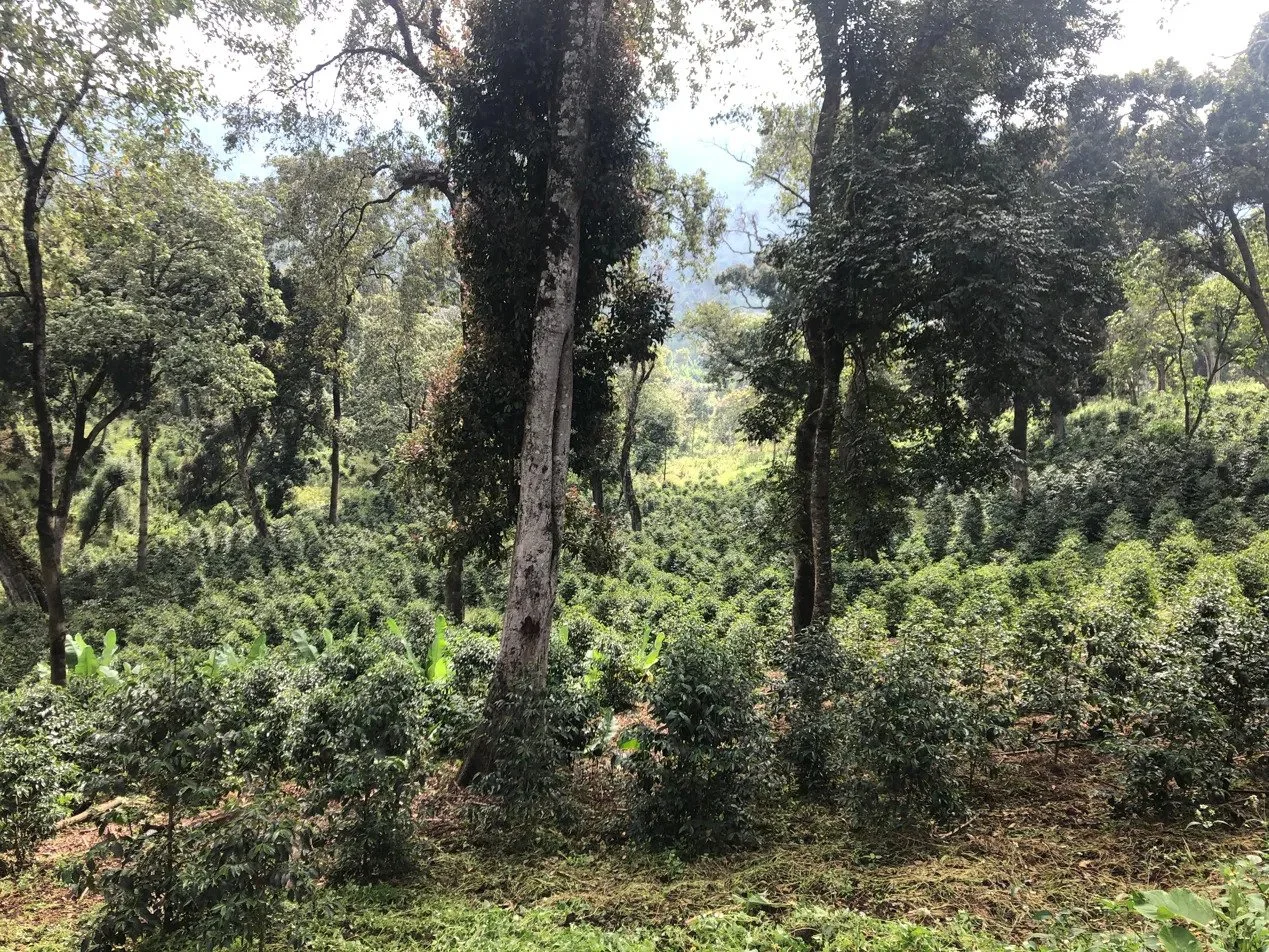
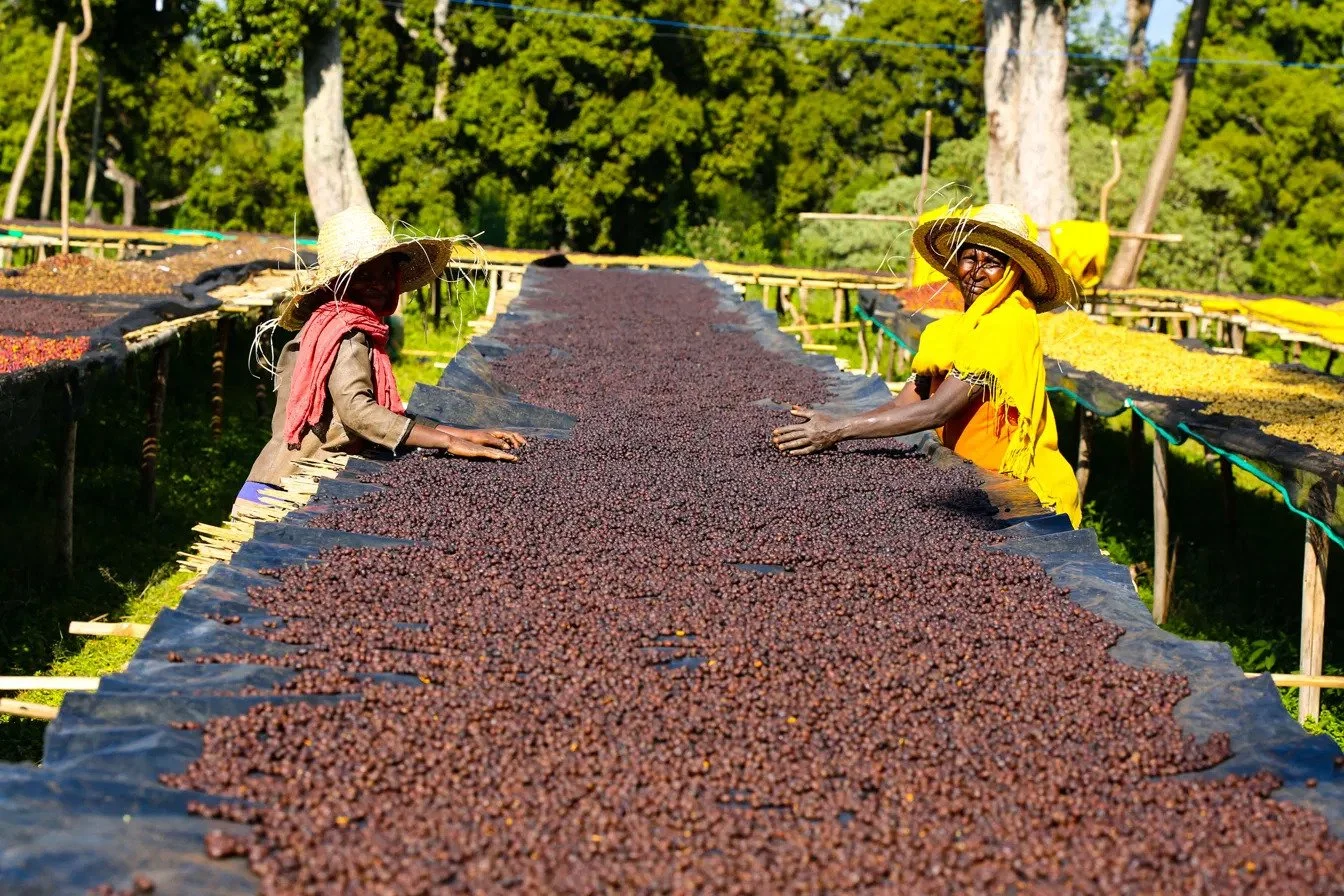
Shade-grown coffee in Sidama, and cherry drying whole on raised beds. Natural processing means the fruit stays on the seed the entire time it dries, which is where all that tropical sweetness comes from.
How we buy
What "relationship coffee" costs us, and buys them
Most coffee in the world is bought the way wheat is bought. It moves through brokers, gets blended with other coffee from other places, and by the time it reaches a roaster nobody can tell you whose farm it came from. It is fast, it is cheap, and it works fine if all you need is coffee.
We buy these three the slow way instead. We know the mill. We commit to the lot before the harvest is picked, which is the point in the year when a producer actually needs cash in hand rather than a promise. At La Armonia Hermosa we buy the entire crop, every season, so the community is never left holding coffee it cannot sell. And we come back the following year, which means we can have an honest conversation about what cupped well and what did not, and then watch that conversation show up in the cup two seasons later.
None of that is charity. It is the only version of this that lasts. A farm that cannot cover its costs eventually stops being a farm, and the coffee we love disappears with it. Buying this way is how we make sure there is a 2035 harvest to look forward to.
Come taste the difference
Fresh crop only happens once a year, and the window when a coffee is at its absolute peak is not very long. Ask a barista at any of our cafes what just landed, and ask them what changed. Better yet, pull two of the three and taste them next to each other, because the year-over-year shift in these notes is not subtle once you go looking for it.
Thanks for drinking coffee that has a name attached to it. It genuinely matters on the other end.