iStock_000019015491Large.jpg

Blog

Find out what's happening around Vienna Coffee Company

Is Skim Milk Making you Fat?

Enjoying your skim milk lattes every day and thinking that you are saving yourself your waistline? Think again. This week, indulge in a whole milk latte, it not only tastes better and froths better, but it also is better for you! Read below for more details.

Taken from:
Is Skim Milk Making You Fat? The Body: Details.com

Is Skim Milk Making You Fat?

How the "diet" dairy choice is putting your health—and waistline—at risk.

May 2011 Issue

You probably spend all of one second deciding what kind of milk to put in your coffee. What's to debate? If you want to keep the pounds off and avoid heart disease, choose skim. This is gospel, after all: It's recommended by the USDA and has so permeated our thinking that you can't even find reduced-fat (2%) milk at places like Subway—and forget about whole.

But is it true? Let's start with the question of what's fattening. Whole milk contains more calories and, obviously, more fat. A cup has 146 calories and almost 8 grams of fat, reduced-fat (2%) has 122 calories and almost 5 grams of fat, low-fat (1%) has 103 calories and 2.5 grams of fat, and nonfat (skim) has 83 calories and virtually no fat.

But when it comes to losing weight, restricting calories has a poor track record. Evidence gleaned from numerous scientific studies says that if you starve yourself for lunch, you typically compensate at dinner. And according to a 2007 report in the Archives of Internal Medicine, telling overweight and obese patients to cut calories led to only "transient" weight loss—it didn't stay off. The same goes for cutting saturated fat. In 2003, the Cochrane Collaboration, a respected source for unbiased reviews of research, compared low-fat diets with low-calorie diets and found that "fat-restricted diets are no better than calorie-restricted diets in achieving long-term weight loss." As Walt Willet of the Harvard School of Public Health wrote in the American Journal of Medicine, "Diets high in fat do not appear to be the primary cause of the high prevalence of excess body fat in our society, and reductions in fat will not be a solution."

It's becoming widely accepted that fats actually curb your appetite, by triggering the release of the hormone cholecystokinin, which causes fullness. Fats also slow the release of sugar into your bloodstream, reducing the amount that can be stored as fat. In other words, the more fat in your milk, the less fat around your waist. Not only will low-fat milk fail to trim your gut, it might even make you fatter than if you were to drink whole, according to one large study. In 2005, researchers from the Harvard School of Public Health and other institutions studied the weight and milk consumption of 12,829 kids ages 9 to 14 from across the country. "Contrary to our hypothesis," they reported, "skim and 1% milk were associated with weight gain, but dairy fat was not."

But surely low-fat milk is better for your heart? We are often told to watch our consumption of dairy because it raises our bad cholesterol, the kind known as LDL. But LDL comes in at least four varieties, and only the smallest and densest of them are linked with heart disease. Dairy fat, it turns out, affects only the large, fluffy kind of LDL—the benign kind.

And here's a final thought: How would you feel if you opened a carton and poured a chalky, bluish-white liquid into your coffee? That's the color many nonfat milks are before powdered milk is added to whiten them—a process that brings its own problems. Any way you look at it, there's been a lot of whitewashing of skim milk's image.

• • •
THE SKINNY ON NONFAT MILK

To turn skim milk white, "some companies fortify their product with powdered skim," says Bob Roberts, a dairy scientist at Penn State. Powdered skim (which is also added to organic low-fat milks) is produced by spraying the liquid under heat and high pressure, a process that oxidizes the cholesterol. In animal studies, oxidized cholesterol triggers a host of biological changes, leading to plaque formation in the arteries and heart disease, Spanish researchers reported in 1996. "OCs are mutagenic and carcinogenic," they wrote. In 1998, Australian researchers studied rabbits fed OC and found that the animals "had a 64% increase in total aortic cholesterol" despite having less cholesterol in their blood than rabbits fed natural sources of the substance. (A 2008 Chinese study with hamsters confirmed these findings.) Roberts says the amount of OC created by adding powdered skim is "not very much," but until the effects on humans are known, it's impossible to say what's a safe level.


Read More http://www.details.com/style-advice/the-body/201105/skim-milk-non-fat-milk-diet-foods#ixzz1O40ixHN2
Coffee Prices are on the rise due to Climate Change

Thanks to unusual temperatures and rainfall, coffee production is falling in some parts of the world, just as emerging markets like India and China are embracing the drink.

Coffee

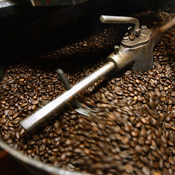
Freshly-roasted espresso coffee beans cool in a refurbished 1918 Probat coffee bean roaster. (Sean Gallup/Getty Images)

Jeremy Hobson: The price of coffee beans is above $3 a pound for the first time since the 1970s. And experts say coffee inventories are unlikely to build up in the forseeable future. Worse yet, some are saying we've reached "peak coffee" levels.

Here to explain is our sustainability reporter Adriene Hill. Good morning.

Adriene Hill:Good morning Jeremy.

Hobson: So what is going on here? Why are we talking about peak coffee?

Hill: Well, coffee production in some parts of the world is falling. Places like Colombia have seen their coffee production really just decline pretty dramatically since 2007. And a lot of what's happening seems to be related to weather issues. So they're seeing unusual rainfall, they're seeing unusual temperatures. These things are not good for coffee beans; especially the very finicky, the very precious arabica bean is not interested in big weather changes. And the problem is, it looks like, and some scientists think it could be related to climate change.

Hobson: Climate change, so it's not a temporary thing?

Hill: That's the big worry, and that's why we're talking about peak coffee. Right now, it's so concerning that some international organizations have actually turned to the United Nations and said that, hey, let's start talking about coffee crops. As you look for it, as you start thinking about climate change globally, we need to pay attention to the coffee supply.

Hobson: And what is all this going to do to coffee prices?

Hill: You want to guess?

Hobson: Uh, going up?

Hill: Up is right. Way up. So coffee production is falling at the same time that people in emerging markets like India and China are realizing just how delicious and wonderful coffee really is. And the price of coffee futures -- what the traders buy and sell for it -- has doubled in the last year.

Hobson: So not good news at all for coffee drinkers.

Hill: Not at all. Starbucks just upped the costs of its bagged coffee about 12 percent. Kraft announced it would bump the cost of Maxwell House by more than 20 percent. And that's just one in a series of price hikes. So our morning coffee is going to get a lot more expensive, which is bad news for me.

Hobson: And me as well. And probably most of the people listening right now. Thanks Adriene, Marketplace's Adriene Hill.

Hill: Thank you Jeremy.

SCAA's Annual Exposition and the National Barista Competition

Specialty Coffee Association of America is having their

3RD ANNUAL SCAA SYMPOSIUM: THE EXECUTIVE SERIES
in Houston, Tx this weekend paired with the
23rd ANNUAL SCAA EXPOSITION
AND THE NATIONAL BARISTA COMPETITION!

This is a big weekend in the specialty coffee world, and our coffee sourcer of our La Armonia Hermosa coffee, Les Stoneham, is taking a front seat. He's been able to listen to some of the most forward thinking people in coffee, and sit down and have a delicious dinner with them. We hope that he has a lot of fun and learns a lot!

Coffee prices are on the rise

We found this article quite interesting. In fact just this weekend Starbucks had to raise their prices by $1 also. Please read below for more information. If you have questions about why this is happening, don't hesitate to call (865.681.0517) or email us (info@viennacoffeecompany.com).


By Marcy Nicholson

NEW ORLEANS, March 17 (Reuters) - Kraft Foods Inc

said Thursday it raised its U.S. list prices for Maxwell House

and Yuban ground coffees by a whopping 22 percent and its

instant coffee by around 10 percent.

The price hikes, which were effective on Wednesday, marked

the company's fourth coffee price hike in a year and came after

arabica coffee futures soared to a 34-year high this month.

"(The) increases are due to sustained increases in green

coffee," Kraft spokeswoman Bridget MacConnell told Reuters on

the sidelines of the annual National Coffee Association meeting

in New Orleans.

The company raised the price for Maxwell House and Yuban

ground coffees by 70 cents per pound equivalent, and for

instant coffees by 6.25 cents per ounce.

Excluded from the increase were single-serve Tassimo items

and the Maxwell House International line of specialty soluble

beverages, MacConnell said.

Arabica coffee futures more than doubled in price by early

March in a rally that began in June 2010 on fund buying and

tight supplies, with the benchmark May contract reaching

a 34-year high for the second position at $2.9665 per lb.

Roasters have been forced to raise their list prices over

the past nine months as a result of the sustained rally.

Kraft most recently raised its prices in December. J.M.

Smucker Co , known as the trendsetter for coffee price

changes, most recently increased its coffee prices last month,

by 10 percent.

Robusta futures trading on Liffe in London have

joined in the rally, soaring to a three-year high at $2,661 per

tonne on Thursday.

(Editing by Walter Bagley)

((marcy.nicholson@thomsonreuters.com; +1 646 223 6043; Reuters

Messaging: marcy.nicholson.reuters.com@reuters.net))

Vienna Coffee Company

Great Coffee is an Adventure

Vienna Coffee Company | 212 College Street, Maryville, TN 37804, USA